Choosing a childcare centre is one of the most significant decisions you will make for your child. You are not just picking a convenience — you are choosing the educators who will spend more waking hours with your child than almost anyone else during those early years, and the environment where the foundations of their confidence, curiosity, and social development will be built.
The good news is that Victoria has some of the strongest childcare quality standards in the country. The not-so-good news is that knowing which questions to ask — and what the answers actually mean — is not always obvious, especially when you are visiting centres for the first time.
This guide covers the seven things that matter most, written specifically for families searching for childcare near Keilor East, Keilor Heights, Niddrie, and the surrounding western suburbs.
1. Check the NQS Rating First
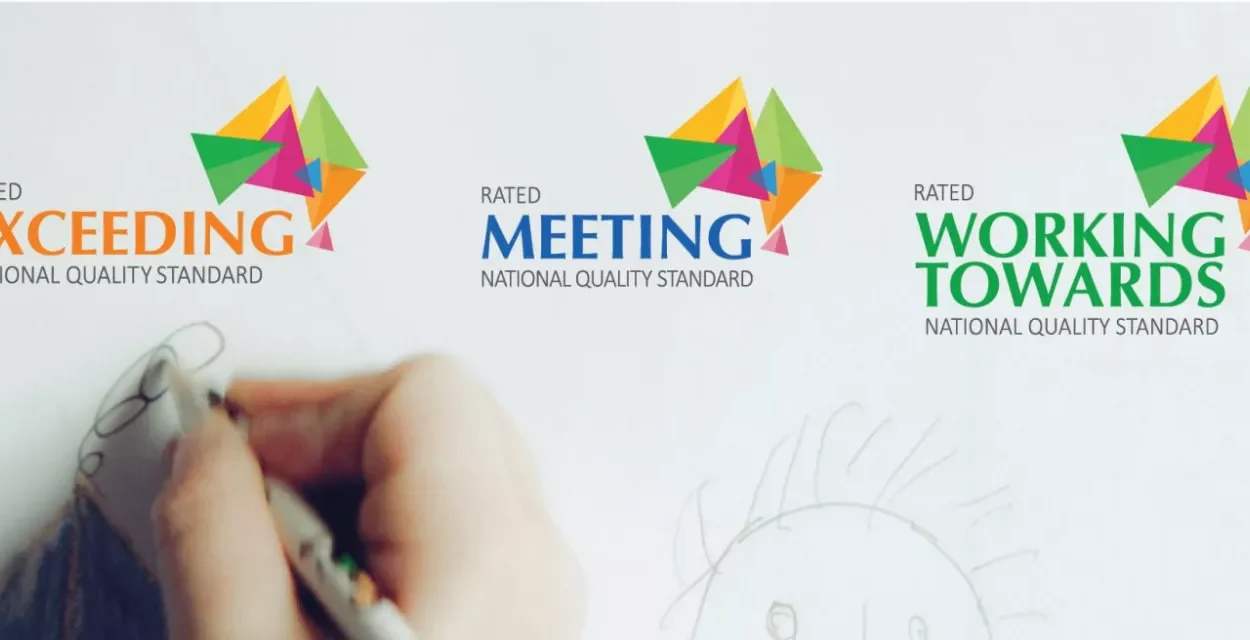
The National Quality Standard (NQS) is the official government benchmark for childcare quality across Australia. Every approved long day care centre, kindergarten, and outside-school-hours service is assessed against it and given one of five ratings:
| Rating |
What it means |
| Excellent |
Exceptional practice across all areas — the top 1-2% of services nationally. Centres must apply for this rating separately. |
| Exceeding NQS |
Surpasses the standard in 4 or more of the 7 quality areas. Above average. |
| Meeting NQS |
Meets all 7 quality areas to the required standard. The national benchmark for good-quality care. |
| Working Towards NQS |
Has some areas that still need improvement. Not necessarily unsafe, but worth investigating further. |
| Significant Improvement Required |
Fails to meet essential standards. Avoid until further notice. |
As a practical starting point: a Meeting NQS rating or above is what you should be looking for. The NQS covers 7 quality areas including educational programs, children’s health and safety, physical environment, staffing, relationships with children, collaborative partnerships with families, and governance. From January 2026, child safety requirements in Quality Areas 2 and 7 were also strengthened.
2. Ask About Educator Qualifications and Ratios
A centre’s NQS rating tells you about overall quality, but educator qualifications and ratios tell you about the day-to-day experience your child will have.
Qualifications
In Victoria, educators working with children in long day care must hold at minimum a Certificate III in Early Childhood Education and Care. Room leaders should hold a Diploma. Kindergarten programs must be led by a teacher who holds a Bachelor of Early Childhood Education or equivalent, registered with the Victorian Institute of Teaching (VIT).
When you tour, ask: “What qualifications does the lead educator in my child’s room hold?” A confident, specific answer is a good sign. Vague answers about “experienced staff” are not.
Educator-to-child ratios
Victoria’s ratios are set by the NQF and are actually stricter than most other Australian states for younger children:
| Age group |
Victoria NQF ratio |
What this means in practice |
| Under 3 years |
1 educator to 4 children |
Stricter than the national default of 1:5 — more individual attention for babies and toddlers |
| 3 to 5 years |
1 educator to 11 children |
Applies to long day care rooms for this age group |
| Kindergarten program (kinder session) |
1 teacher to 15 children |
Specific to the teacher-led kinder program hours |
Some centres staff above these minimums, particularly during peak morning and afternoon hours. Ask: “What are your actual staffing ratios throughout the day, including during pick-up and drop-off?”
3. Find Out How They Communicate With Parents
One of the most common complaints from parents who change childcare centres is that they felt out of the loop. They dropped their child off, picked them up, and had little idea what actually happened in between.
Ask every centre you visit: “How do you keep us updated on our child’s day, their learning, and any incidents?”
What you want to hear:
- A named app or platform — such as OWNA, Storypark, or HiMama. Parents should be able to see daily observations, photos, and learning documentation through their phone
- Face-to-face communication at pick-up — not just a note at the door, but a brief handover with the educator
- Documented incident reporting — any bump, scratch, or incident should be logged and signed off by a parent
- Regular family communication such as newsletters, learning updates, and family events
| At Little Stars |
| We use the OWNA app so parents can see photos, observations, and learning moments shared by educators throughout the day. As one Keilor East parent recently noted in their Google review: “Her learning and development is supported in various ways and shared with us on the OWNA portal well.” |
4. Understand Exactly What Is Included in the Daily Fee
Daily fees vary significantly across centres in the Keilor East area, but the headline number is not the whole story. What matters is what is included.
Ask specifically:
- Are all meals included? (breakfast, morning tea, lunch, afternoon tea)
- Are nappies, wipes and sunscreen provided, or do you need to bring your own?
- Is the kindergarten program included in the daily fee, or is it charged separately?
- Are excursions and incursions included, or are there additional charges?
- What happens to fees during public holidays — do you pay a full day if the centre is closed?
A centre charging $145/day with meals, nappies and kinder included is often better value than one charging $130/day where meals are extra. Always ask for an example fortnightly invoice showing CCS and Free Kinder applied, so you can see the real out-of-pocket cost.
| At Little Stars |
| Our daily fee of approximately $173 includes all meals (breakfast through afternoon tea), nappies, wipes, sunscreen, and the integrated kindergarten program. No hidden extras. Our Centre Director can provide a personalised invoice example at your tour. |
5. Ask About the Curriculum Framework
Every approved childcare centre in Australia is required to deliver their programs in line with the Early Years Learning Framework (EYLF) — also known as “Belonging, Being and Becoming.” This is the national framework that guides how educators plan learning experiences and support children’s development from birth to school age.
But the EYLF is a framework, not a prescription. What matters is how a centre actually brings it to life. Ask:
- “How do your educators plan programs for individual children?”
- “How do you track and document each child’s learning and development?”
- “Can you show me an example of a learning story or observation?”
Also ask about the centre’s approach to play — specifically, whether they use play-based learning (which the EYLF strongly supports) or a more formal, structured approach. Research consistently shows play-based learning leads to better developmental outcomes in the early years. A centre that can explain their curriculum approach clearly and enthusiastically, with specific examples, is a genuinely good sign.
| At Little Stars |
| Our programs are guided by the EYLF and delivered through intentional, play-based learning experiences. You can read more about our curriculum approach before your visit. |
6. Visit in Person — and Trust Your Instincts
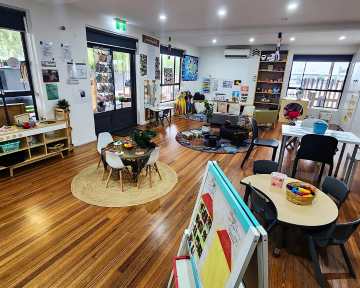
No amount of research replaces an in-person visit. When you tour a centre, you are not just looking at the facilities — you are feeling the atmosphere, watching how educators interact with children, and noticing whether the environment feels warm and intentional or rushed and institutional.
Things to look for during your visit:
- How do staff greet you? Are they warm and engaged, or do they seem distracted?
- How do educators interact with children? Do they get down to the children’s level, use their names, and respond to them genuinely?
- How do the children seem? Settled, engaged, and comfortable is a good sign. Distressed or disengaged children are worth noting.
- Is the environment clean and purposeful? Look for age-appropriate materials, natural light, outdoor access, and spaces that invite exploration.
- Do you feel welcomed? Your gut response to a place — within the first few minutes of arrival — is one of the most reliable signals you have.
If you cannot visit during the week, take our virtual tour to explore the rooms at Little Stars before booking an in-person visit. It gives you a real feel for the environment without the logistics of a weekday trip.
7. Check Free Kinder Eligibility Before You Commit
This one is often overlooked until after enrolment — which can be a costly oversight. Not all childcare centres are approved to deliver government-funded kindergarten programs. If your child is turning 3 or 4 this year and you are not asking about Free Kinder, you may be missing up to $2,101 per child per year in fee offsets.
Before committing to any centre, ask:
- “Are you approved to deliver a funded 3-year-old kindergarten program?”
- “Are you approved to deliver a funded 4-year-old kinder / Pre-Prep program?”
- “How is the Free Kinder offset applied to my invoices?”
A participating centre should answer all three confidently. For a full explanation of how Free Kinder works at long day care centres and how it stacks with the Child Care Subsidy, read our complete Free Kinder 2026 guide.
| At Little Stars |
| We are an approved long day care centre for both 3-year-old and 4-year-old funded kindergarten programs. The Free Kinder offset is applied weekly to your invoice automatically — no claims, no portals, no paperwork beyond enrolment. |
The Questions to Ask on Every Tour
Take this list with you. A good centre will welcome every question.
| Topic |
Question to ask |
| NQS Rating |
What is your current NQS rating, and when were you last assessed? |
| Qualifications |
What qualifications does the lead educator in my child’s room hold? |
| Ratios |
What are your educator-to-child ratios throughout the day, including at drop-off and pick-up? |
| Communication |
How do you keep parents updated on their child’s day and development? |
| Fee inclusions |
What is included in the daily fee? Can I see an example invoice after CCS and Free Kinder? |
| Curriculum |
Can you show me how you document and plan for individual children’s learning? |
| Free Kinder |
Are you approved for funded 3-year-old and 4-year-old kinder programs? |
| Settling in |
What does your settling-in process look like for a new child? |
| Vacancies |
Do you have availability for my child’s age group and preferred days? |
| Excursions |
Do you run excursions and incursions? Are these included in the daily fee? |
Ready to Tour Little Stars Near Keilor East?
At Little Stars Early Learning Centre, we welcome every question on this list — and we will walk you through our rooms, introduce you to the educators, and give you a personalised fee estimate on the spot. We are a locally owned, government-approved centre rated Meeting NQS, just 2 minutes from the heart of Keilor East.
Book a Tour
Take the Virtual Tour
Join the Waitlist
Frequently Asked Questions
Look for a centre rated ‘Meeting NQS’ or above. This means the centre meets the national benchmark across all 7 quality areas assessed by ACECQA. You can verify any centre’s rating for free at StartingBlocks.gov.au or the ACECQA national register — search by name, suburb, or postcode.
Educators should hold at minimum a Certificate III in Early Childhood Education and Care. Room leaders should hold a Diploma, and any kindergarten program must be led by a VIT-registered teacher holding a Bachelor of Early Childhood Education or equivalent. Ask specifically about the lead educator in your child’s room, not just the centre’s general staffing.
A good all-inclusive daily fee covers all meals (breakfast, morning tea, lunch, and afternoon tea), nappies, wipes, and sunscreen. Ask whether the kindergarten program, excursions, and incursions are included. Always request an example invoice showing CCS and Free Kinder applied so you can see your actual out-of-pocket cost before committing.
Contact centres directly to ask about availability for your child’s age group and preferred days. Some age groups — particularly the under-2s room and popular days — fill 6 to 12 months in advance. Contact Little Stars to check current availability, or join our waitlist with no obligation.
Yes — absolutely. Research, ratings, and questions all help, but the way a centre feels when you walk in the door is a genuine signal. Notice how staff greet you, how children seem, and whether you feel genuinely welcome. Most parents who regret a childcare choice describe a moment during the tour where something felt off — but they talked themselves out of it. Trust that instinct.
This post reflects Victorian childcare standards and NQS requirements as of 2026. Ratios, qualifications, and NQS quality areas are set nationally by ACECQA and the National Quality Framework. Always verify a centre’s current rating at StartingBlocks.gov.au before making your decision.